Old money style is more than expensive-looking clothes. It’s an approach to dressing that prioritizes timeless silhouettes, understated elegance, quality fabrics and effortless combinations over flashy logos and constantly changing trends.
Old money style is understated, timeless dressing: tailored pieces, quality fabrics, a neutral colour palette and almost no logos.
From tailored trousers and crisp Oxford shirts to cashmere sweaters and classic loafers, the old money aesthetic is built around clothing that looks sophisticated without demanding attention.
Whether you’re looking to refresh your wardrobe, experiment with a more refined aesthetic or simply learn how to put together better outfits, understanding old money fashion can help you develop a more timeless personal style.
This guide is written for everyone: each piece and outfit includes a note for women and a note for men.
In this guide, we’ll explore what old money style means, its essential clothing pieces, the colours associated with the aesthetic and how to create old money outfits for different occasions.
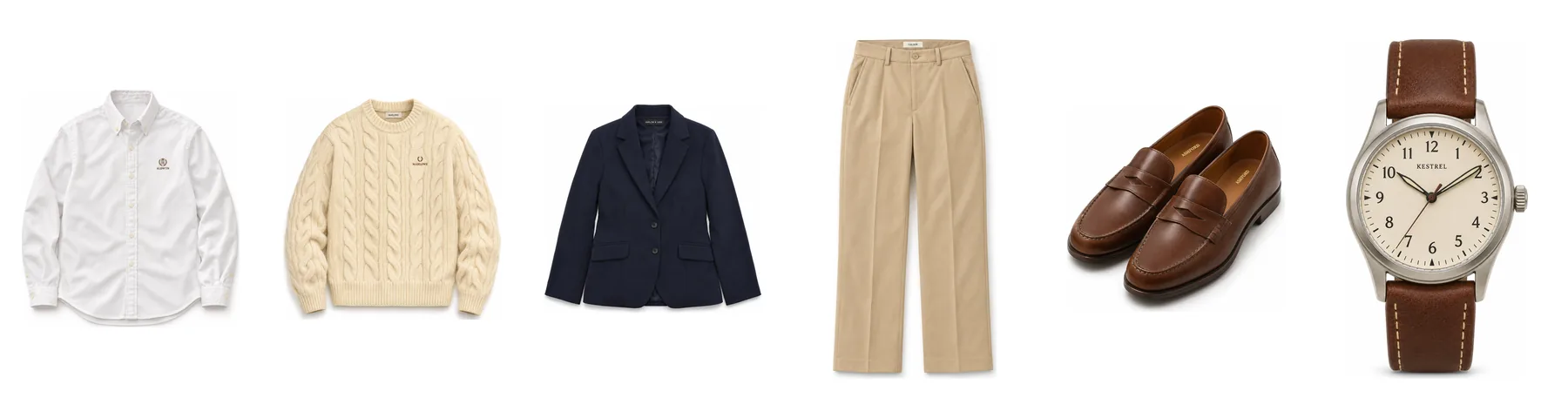
What Does Old Money Style Mean?
Old money style traditionally refers to the understated fashion associated with families who have maintained wealth across multiple generations.
Rather than displaying wealth through prominent designer logos or extravagant outfits, this aesthetic emphasizes subtle details, classic tailoring and timeless clothing.
Think of:
- Well-fitted blazers.
- Crisp white shirts.
- Tailored trousers.
- Cashmere sweaters.
- Leather loafers.
- Neutral colour palettes.
- Minimal accessories.
The overall appearance is polished, relaxed and sophisticated.
Today, old money fashion has become a popular aesthetic among people who appreciate classic European-inspired dressing, traditional tailoring and minimalist luxury.
Importantly, you don’t need an expensive wardrobe to achieve this look. Understanding proportions, colours and clothing combinations matters much more than the price tag.
The Origins of Old Money Style
The phrase “old money” describes wealth that has been passed down through generations, as opposed to “new money” that has been recently earned. The way of dressing associated with it grew out of two traditions.
- British country and aristocratic dress. Tweed jackets, Oxford cloth shirts, knitwear, waxed outerwear and traditional tailoring, all designed to be practical, hard-wearing and worn for years.
- American East Coast and Ivy League style. Often called preppy, it brought in button-down shirts, chinos, blazers, loafers and cable-knit sweaters.
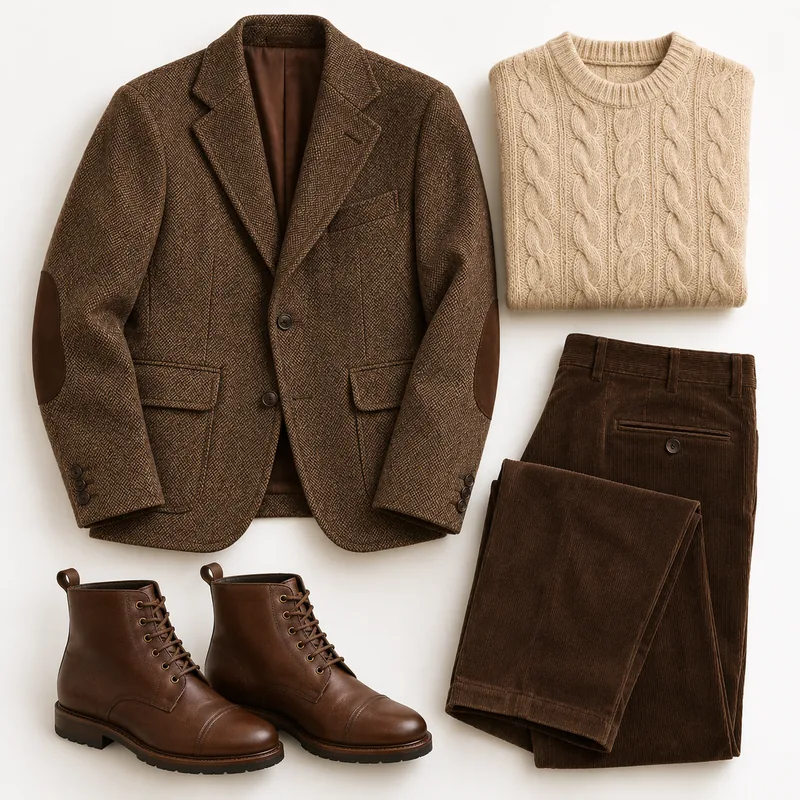
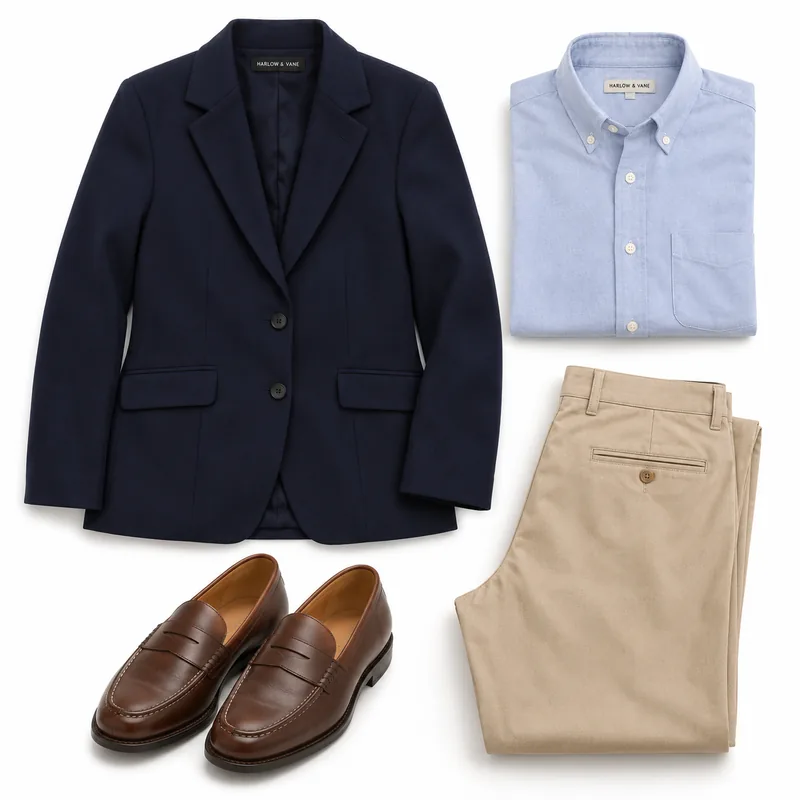
What links the two is a quiet attitude to clothes. Instead of announcing status with logos or the newest trend, people in these circles tended to buy well-made pieces, look after them, and wear them for a long time. That restraint is the real source of the “effortless” look people copy today.
Why Has Old Money Style Become a Trend?
Interest in the aesthetic has grown for a few reasons.
- Social media. The “old money aesthetic” spreads on TikTok, Instagram and Pinterest, where outfit ideas are easy to save and copy.
- A shift towards quiet luxury. Many people are moving away from logo-heavy clothing towards subtle design, good fabrics and fit.
- A reaction to fast fashion. Buying fewer, better pieces appeals to people who are tired of clothes they only wear a few times.
- It is easy to wear. A small set of neutral basics mixes and matches into many outfits, which makes the style practical as well as attractive.
How I Went From Streetwear to Old Money Style
I’m not a stylist or a fashion professional. I’m just a regular guy who used to dress almost entirely in streetwear.
That changed after I met a model who showed me how colours work together. Once I understood how to combine colours, I started to see why some outfits look effortless and others don’t. From there I moved towards old money style: simple, well-fitting pieces in colours that go together.
Two things made it work for me: thrifting and tailoring. I look for good pieces second-hand, then have them tailored so they fit properly.
These days people often ask me where I bought my clothes, and I get compliments on my style. For me it comes down to colour and fit.
7 Essential Pieces for an Old Money Wardrobe
Building an old money wardrobe starts with versatile clothing that works across different outfits and occasions.
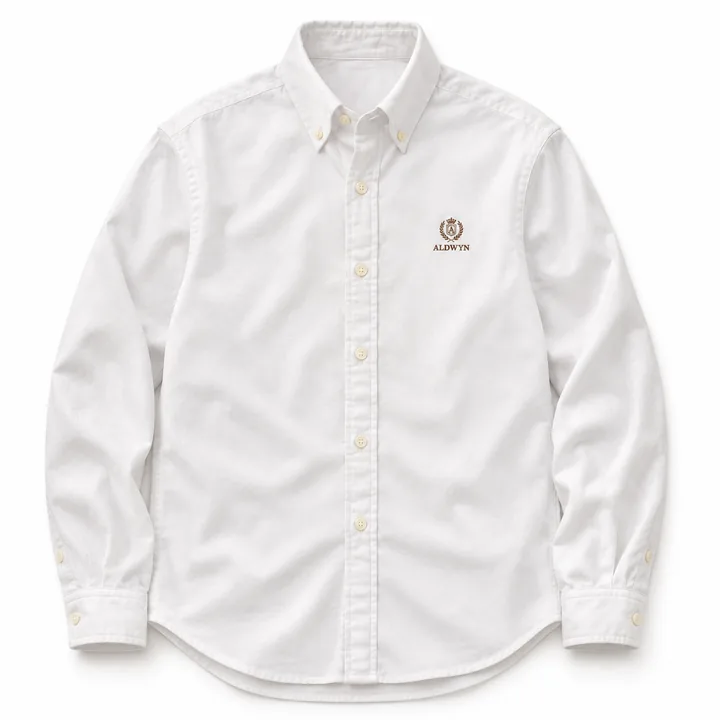
Oxford Shirts
A crisp Oxford shirt is one of the most recognizable pieces associated with classic dressing.
White, light blue and subtle striped versions are particularly versatile.
You can wear an Oxford shirt with:
- Beige tailored trousers.
- Navy chinos.
- Dark denim.
- A knitted sweater draped over your shoulders.
For a relaxed appearance, leave the top button undone and avoid overly tight fits.
Women: wear it oversized and half-tucked, or knot it at the waist over a skirt. Men: keep the fit slightly relaxed with the collar open.
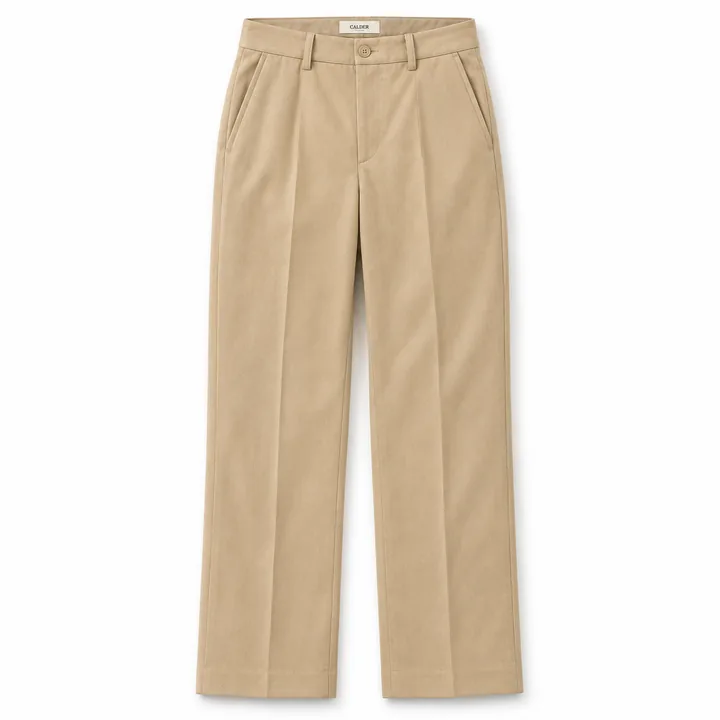
Tailored Trousers
Well-fitted trousers can make even a simple outfit look considerably more refined.
Look for straight-leg or gently tapered silhouettes in colours such as:
- Beige.
- Cream.
- Charcoal.
- Navy.
- Brown.
Pair them with Oxford shirts, lightweight knitwear or structured blazers.
If I could only improve one thing in a wardrobe, it would be the trousers. Buy a good pair, or have a pair tailored to you. In my experience, good trousers make almost any outfit look good.
Women: high-waisted straight or wide-leg cuts in the same colours. Men: straight or gently tapered, hemmed to just touch the shoe.
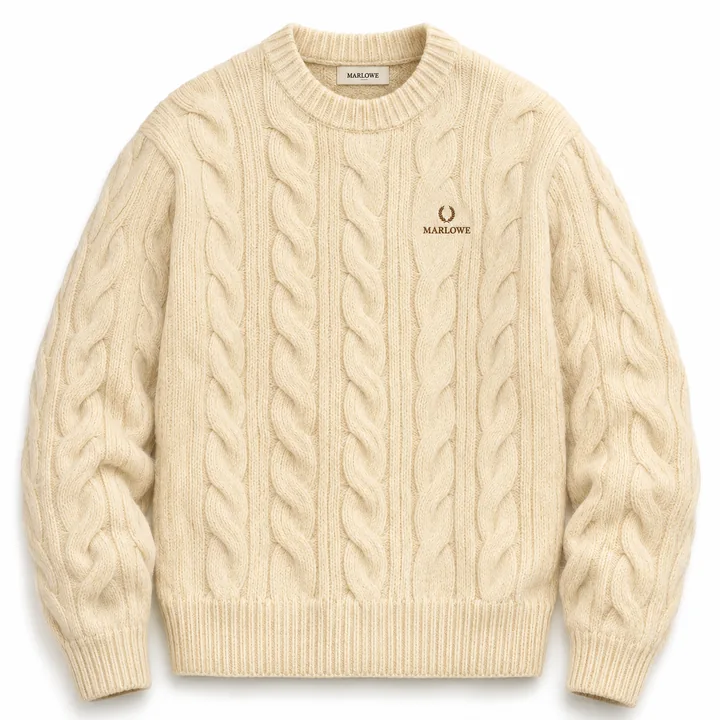
Knitwear and Cashmere Sweaters
Knitwear adds texture and sophistication without making an outfit look overly formal.
Crewneck sweaters, cable-knit designs and fine-gauge cashmere are particularly suitable.
Popular colours include cream, navy, burgundy, camel and grey.
You can wear a sweater over a collared shirt or layer it over your shoulders for a relaxed, preppy appearance.
Women: a fitted knit, or a cardigan over a collared shirt. Men: a crewneck or cable-knit over an Oxford shirt.
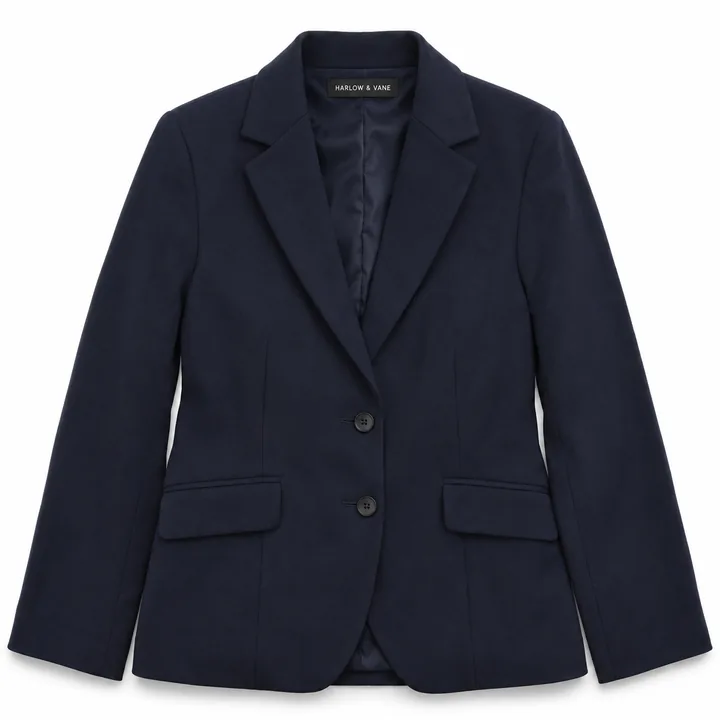
Tailored Blazers
A well-structured blazer is an essential investment for anyone interested in classic fashion.
Navy, brown and beige are particularly versatile.
Wear a blazer with tailored trousers for a formal appearance or combine it with dark denim for smart casual dressing.
Women: a slightly longer single-breasted cut, worn open or belted. Men: a soft-shouldered navy blazer with minimal padding.
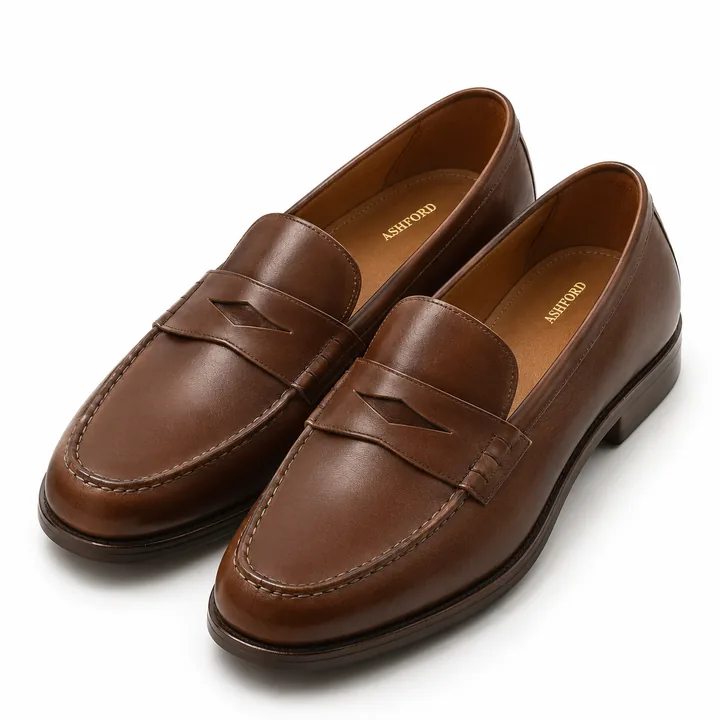
Classic Loafers
Footwear plays an important role in completing an old money outfit.
Leather loafers, suede loafers and classic penny loafers are popular choices.
Brown and dark burgundy leather work particularly well with neutral clothing.
Women: penny loafers or leather ballet flats. Men: penny or suede loafers.
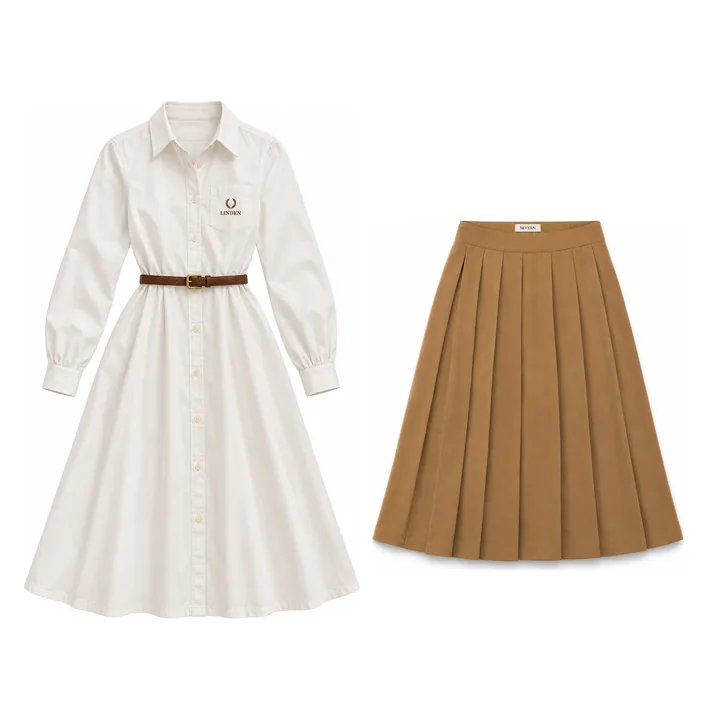
Minimalist Dresses and Skirts
For women, understated dresses and well-tailored skirts are excellent additions to an old money wardrobe.
Consider:
- Midi dresses.
- Pleated skirts.
- Structured shirt dresses.
- Tailored pencil skirts.
- Knit dresses.
Choose simple silhouettes, elegant fabrics and subtle detailing rather than excessive embellishments.
Men: the same restraint applies with tailored shorts, pleated trousers and a knitted polo.
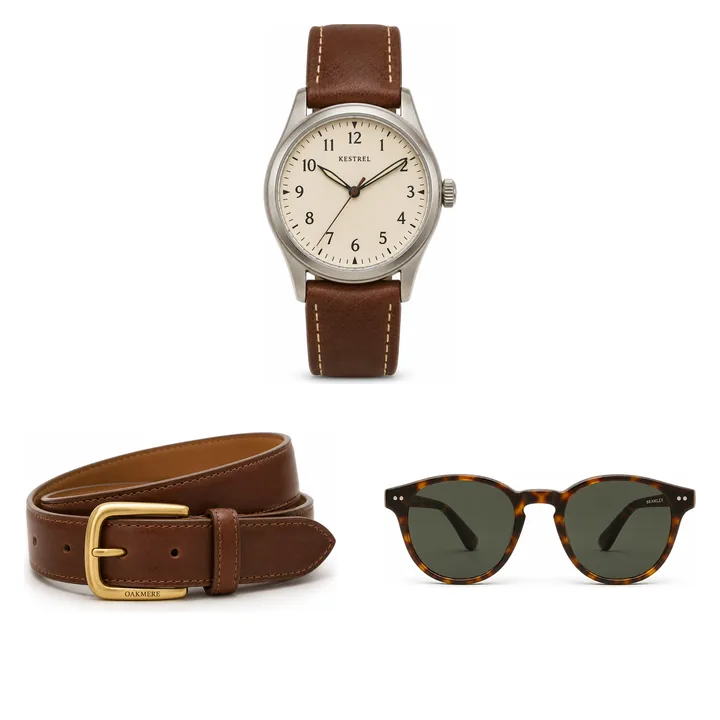
Timeless Accessories
Accessories should complement an outfit rather than dominate it.
Consider:
- Leather belts.
- Classic watches.
- Structured handbags.
- Silk scarves.
- Pearl jewellery.
- Subtle sunglasses.
A few carefully selected accessories can make an otherwise simple outfit feel complete.
Women: a structured bag, silk scarf or pearl studs. Men: a leather belt, a field watch and a plain leather wallet.
The Best Colours for Old Money Outfits
Colour selection is one of the easiest ways to achieve the old money aesthetic.
The style generally favours muted, sophisticated colours that can be combined effortlessly.
| Colour | Best combinations |
|---|---|
| Cream | Beige, brown, navy |
| Beige | White, chocolate brown, olive |
| Navy | White, grey, camel |
| Camel | Cream, black, burgundy |
| Chocolate brown | Beige, cream, light blue |
| Olive green | Beige, white, brown |
| Burgundy | Navy, cream, charcoal |
| Light blue | White, beige, navy |
A useful approach is to build outfits around two or three complementary colours instead of introducing too many competing shades. For more on choosing colours that suit you, see our guide to colour theory for outfits.
Don’t overthink it: find colours that match and keep everything else simple. When the colours work together, even basic pieces look deliberate.
10 Old Money Outfit Ideas
Understanding individual clothing pieces is useful, but knowing how to combine them is what makes the aesthetic work.
Here are ten outfit combinations to experiment with.
White Shirt and Beige Trousers
A white Oxford shirt paired with beige tailored trousers creates a clean and sophisticated outfit.
Complete the look with brown leather loafers and a matching belt.
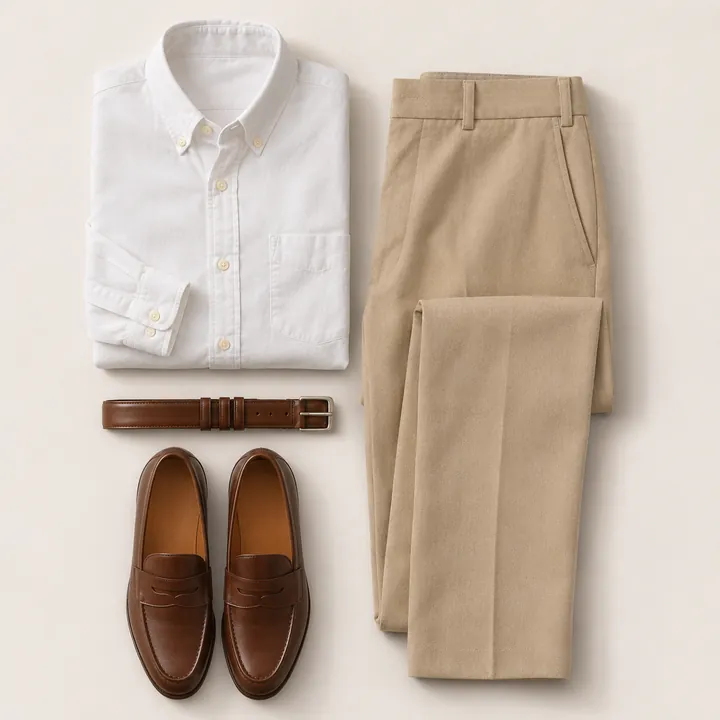
Women: tuck the shirt into a pleated midi skirt, or wear it loose over wide-leg trousers. Men: tuck it in with a belt.
Navy Blazer and White Trousers
A navy blazer combined with white tailored trousers creates a classic nautical-inspired appearance.
Brown loafers and a simple watch complete the outfit.
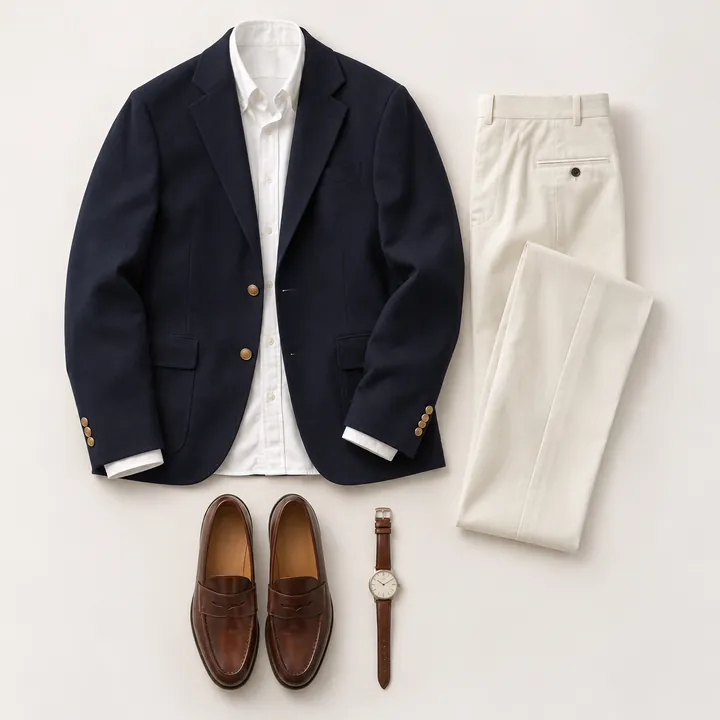
Women: swap the trousers for a white midi skirt. Men: keep the trousers hemmed to the shoe.
Cream Cardigan and Wide-Leg Trousers
A cream knit cardigan with high-waisted, wide-leg trousers in beige or camel makes a soft, polished outfit.
Finish with brown penny loafers. It works especially well in autumn and winter.
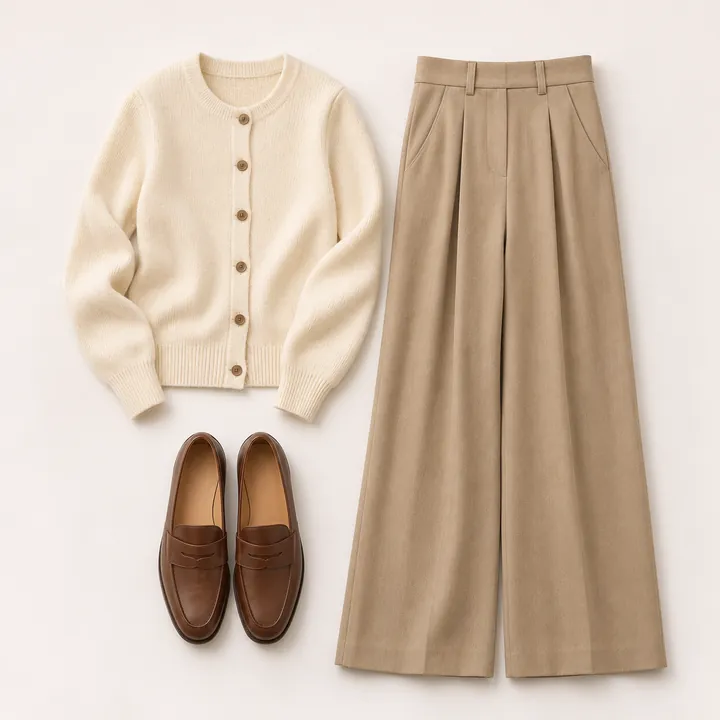
Women: wear it as shown. Men: a cream crewneck sweater with chocolate brown trousers and dark loafers.
Light Blue Shirt and Navy Trousers
A light blue button-down shirt with navy trousers creates a timeless smart casual outfit.
Add brown leather shoes for a polished finish.
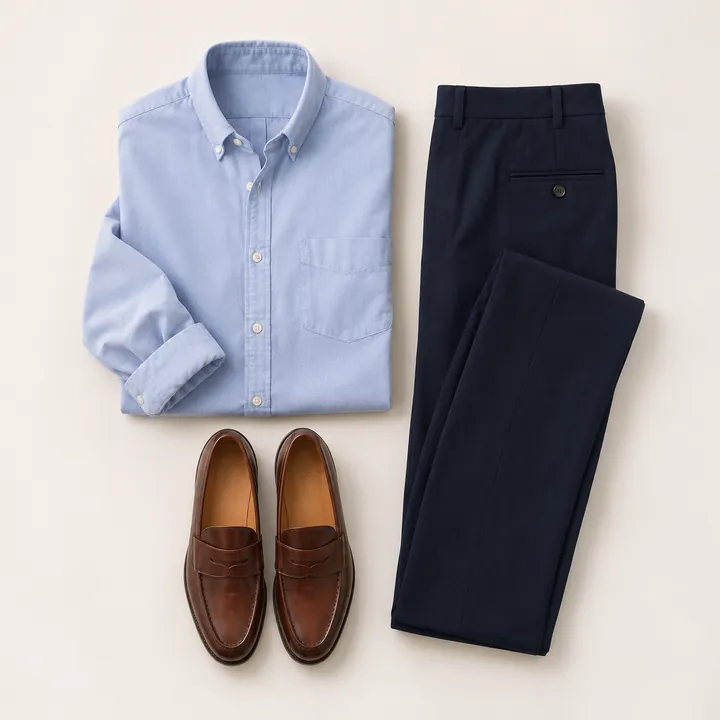
Women: tie the shirt at the hem over navy wide-leg trousers. Men: roll the sleeves once.
Navy Blazer and Pleated Midi Skirt
A navy blazer with gold buttons over a white shirt and a beige pleated midi skirt is a classic preppy look.
Brown ballet flats keep it light and easy to walk in.
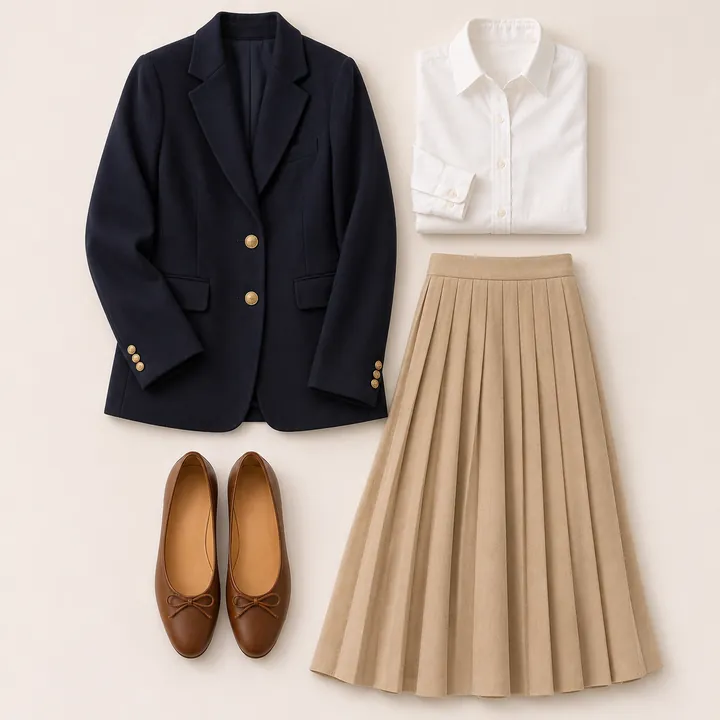
Women: wear it as shown. Men: a cable-knit sweater with tailored beige shorts and brown loafers is the warm-weather equivalent.
Midi Skirt and Fitted Knitwear
For women, a fitted knit top paired with a flowing midi skirt creates an elegant everyday outfit.
Add understated jewellery and pointed-toe flats.
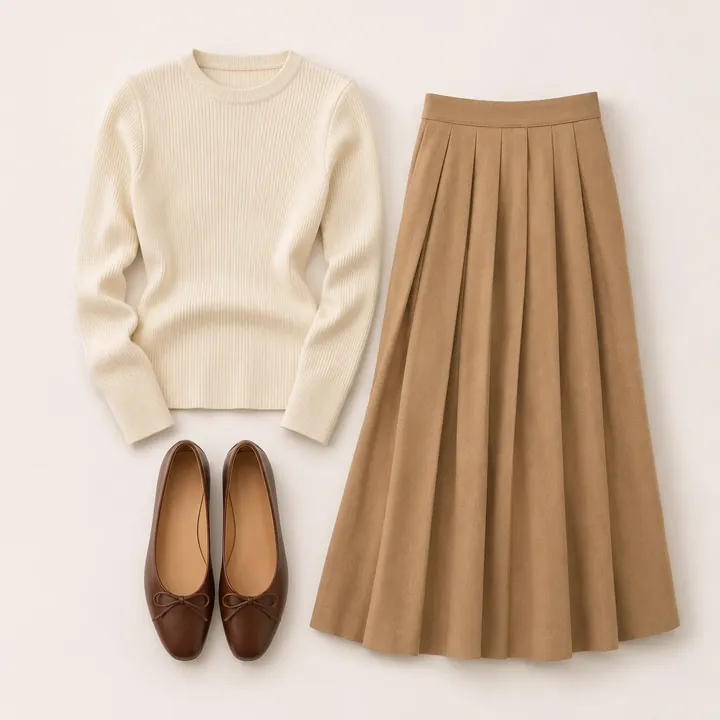
Men: the same palette works as a cream knit with camel chinos and brown loafers.
White Shirt Dress
A structured white shirt dress offers a simple and versatile approach to old money dressing.
Pair it with a leather belt, classic sunglasses and elegant sandals.
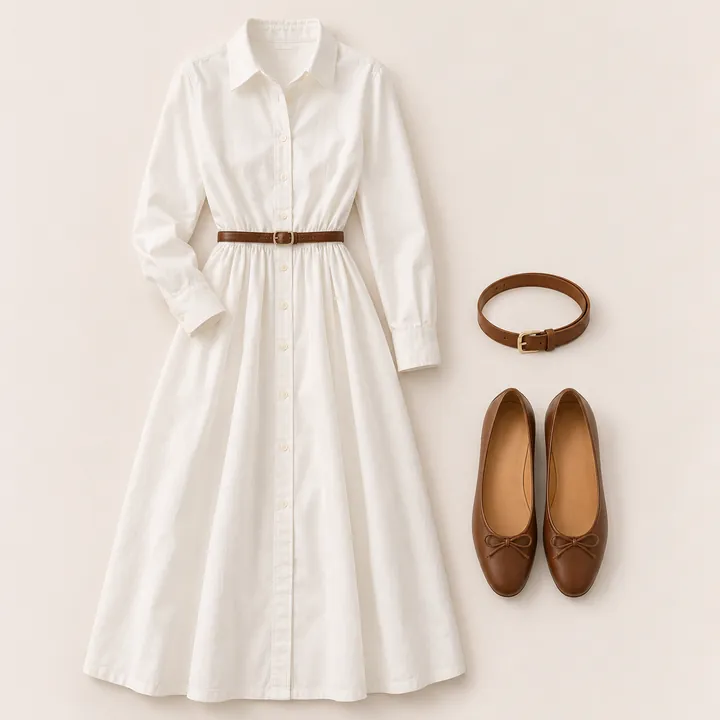
Men: a long white linen shirt with a belt and tailored shorts is the equivalent.
Beige Blazer and Straight-Leg Jeans
A beige blazer paired with dark straight-leg jeans balances relaxed and sophisticated dressing.
Add leather loafers or minimal sneakers.
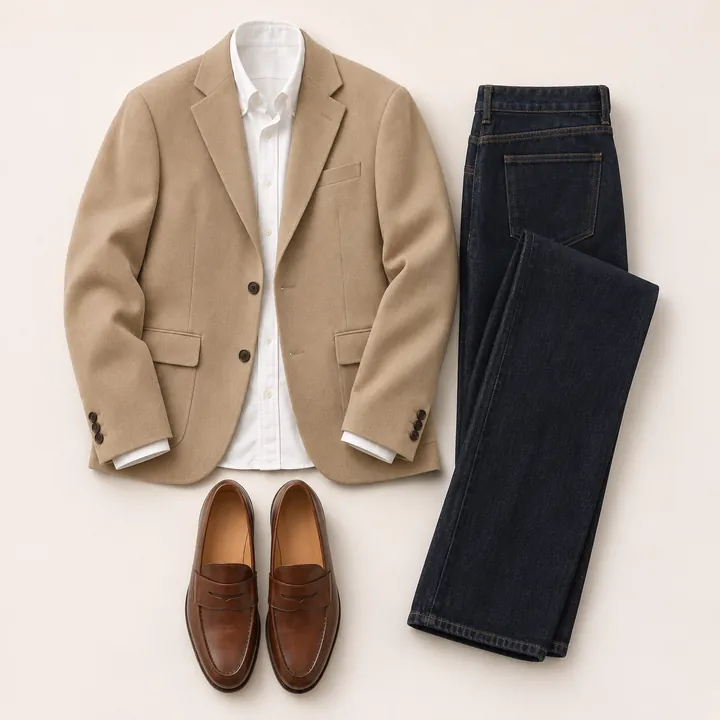
Women: straight-leg dark denim in a high rise. Men: dark straight-leg jeans.
Cream Knit Dress and Camel Coat
A ribbed cream knit dress under a long camel coat is a cold-weather outfit that needs no accessories.
Tan ballet flats keep the colours in the same warm family.
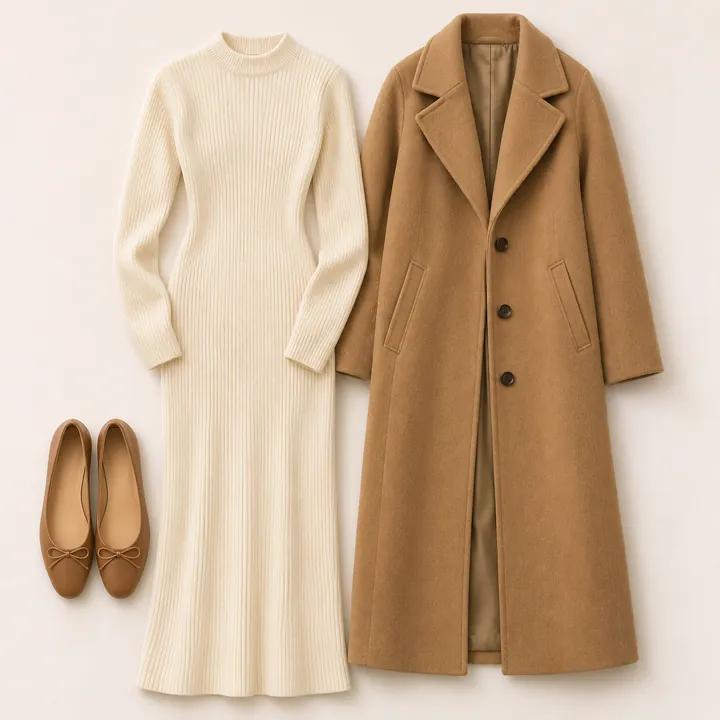
Women: wear it as shown. Men: a cream sweater and cream trousers with tan suede loafers, under a camel overcoat.
Navy Knitwear and White Trousers
A navy sweater paired with white trousers creates a refined outfit suitable for weekend outings and casual occasions.
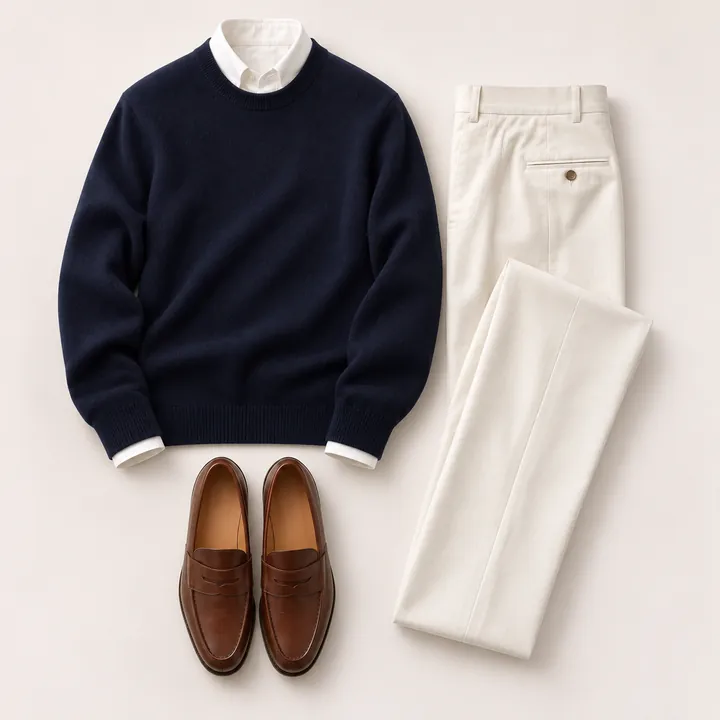
Women: wear the sweater over a white collar with a white pleated skirt. Men: keep the collar tucked in.
How to Dress Old Money Without Spending a Fortune
One of the biggest misconceptions about old money fashion is that it requires expensive designer clothing.
In reality, you can recreate the aesthetic using affordable wardrobe essentials.
Here are some practical tips.
The four-part formula
Prioritize fit over brand names. A reasonably priced shirt that fits properly will often look better than an expensive shirt with an unflattering silhouette.
Choose versatile colours. Build your wardrobe around cream, beige, navy, brown, white and grey. These colours are easy to combine and create multiple outfits.
Avoid unnecessary logos. Choose clothing with subtle detailing rather than prominent branding.
Pay attention to fabrics. Cotton, linen, wool and textured knitwear can add depth and sophistication to an outfit.
Buy fewer, more versatile pieces. Instead of purchasing clothes for individual occasions, look for pieces that work across several different outfits.
Thrift, then tailor. Second-hand shops are a good place to find quality fabrics and classic cuts at a lower price. A tailor can then adjust the fit, for example by shortening a hem or taking in a waist, so the piece looks like it was made for you.
How to Build an Old Money Capsule Wardrobe
A capsule wardrobe is a collection of versatile clothing pieces that can be combined to create multiple outfits.
It’s particularly useful if you want to adopt the old money aesthetic without constantly purchasing new clothes.
Start with a foundation of:
- Two Oxford shirts.
- Two pairs of tailored trousers.
- One navy blazer.
- One neutral knit sweater.
- One pair of dark straight-leg jeans.
- One pair of leather loafers.
- One versatile outerwear piece.
- A few understated accessories.
The objective is to make your existing clothes work together.
For example, one pair of beige trousers can be styled with a white shirt, navy sweater, brown blazer or cream knitwear.
A relatively small wardrobe can therefore create numerous outfit combinations. Our old money outfits for men guide has 15 complete looks, and streetwear vs. old money compares this look with other style identities.
Create More Old Money Outfits With the Clothes You Already Own
I use Kloset to try clothes on before actually wearing them. I save the outfits I like, add the items I already own, and save pieces I find online.
The feature I use most is the daily outfit suggestion. Kloset gives me a new outfit each day made from my own pieces, along with colour combinations I can try. It’s a simple way to find combinations I wouldn’t have thought of.
You don’t necessarily need to purchase an entirely new wardrobe to experiment with old money fashion.
Sometimes, the best outfits come from combining pieces you already own in different ways.
With KlosetAI, you can organize your clothing in a digital wardrobe, explore your existing pieces and experiment with different outfit combinations.
Instead of forgetting about clothes sitting at the back of your wardrobe, discover new ways to style them.
Your next great outfit might already be in your closet.
Explore KlosetAIFrequently Asked Questions
What is the old money aesthetic?
The old money aesthetic is a fashion style inspired by traditional wealthy families. It emphasizes timeless clothing, understated elegance, quality fabrics, classic silhouettes and minimal branding.
What colours are considered old money?
Popular colours include cream, beige, navy, white, camel, chocolate brown, burgundy and olive green. These shades work well together and create sophisticated outfit combinations.
Can you dress old money on a budget?
Yes. You can achieve the aesthetic without purchasing expensive designer clothing. Focus on well-fitting garments, versatile colours, classic silhouettes and quality-looking fabrics.
What shoes are best for old money outfits?
Leather loafers, suede loafers, ballet flats, classic leather sneakers and understated dress shoes are popular choices.
Is old money fashion suitable for everyday wear?
Absolutely. You can incorporate the aesthetic into everyday outfits using Oxford shirts, tailored trousers, knitwear, simple dresses and classic footwear.
What is the difference between old money and quiet luxury?
Old money fashion draws inspiration from traditional, heritage-inspired dressing and preppy styles. Quiet luxury focuses more broadly on understated design, craftsmanship and subtle luxury without prominent branding. The two aesthetics often overlap.
How do I start building an old money wardrobe?
Start with versatile basics such as white shirts, tailored trousers, neutral knitwear, classic footwear and a structured blazer. Choose complementary colours and prioritize pieces that can be styled in multiple ways.
Where can I find old money clothes on a budget?
Thrift and second-hand stores are a good place to start, especially for blazers, knitwear, shirts and trousers. Have pieces tailored where needed, because fit matters more than the label.
Final thought
Old money fashion isn’t about owning the most expensive clothes. It’s about understanding how to combine simple, timeless pieces into outfits that feel effortlessly elegant.

I’m a regular guy who went from streetwear to old money style by learning how colours combine, thrifting, and tailoring what I find. I use Kloset to try on and plan my outfits, and this guide is based on what I’ve actually worn.